 picosf
Automotive body production depends on thousands of precise joints, each contributing to structural strength, dimensional accuracy, and assembly consistency. Manual operations can struggle to maintain the same pace as automated production lines, particularly when vehicle platforms require frequent model changes.
Robotic resistance welding addresses these challenges by coordinating electrode positioning, clamping force, and electrical current within a repeatable process. Its value extends beyond faster joining, since stable welding conditions can also reduce rework, simplify quality monitoring, and support predictable manufacturing schedules.
How Resistance Welding Supports Automotive Manufacturing
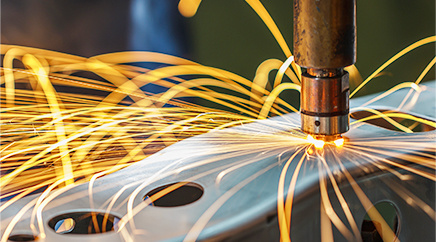
Resistance welding generates heat by passing electrical current through metal parts held together under pressure. The material at the contact area reaches a suitable temperature for joining, while the electrodes maintain force throughout the welding cycle. Unlike processes that require filler metal, this method relies on the workpieces themselves to form the joint.
Automotive body-in-white production uses numerous spot welds to connect steel panels, brackets, reinforcements, and other structural components. These joints must withstand mechanical loads while preserving the intended geometry of the body. Resistance welding applications are particularly relevant to high-volume assembly because individual welds can be completed quickly and repeated across standardized production sequences.
Production efficiency depends on more than the time required to form one weld. Part positioning, electrode movement, equipment availability, and inspection requirements all influence the actual output of a manufacturing cell. A well-designed welding process accounts for these interconnected factors rather than focusing solely on the welding cycle.
Manufacturers seeking additional process flexibility can explore how adaptive resistance welding control works, particularly in robotic welding applications where changing production conditions may affect weld quality over time.
How Automation Improves Welding Consistency
Robots follow programmed trajectories to position welding guns at specified locations. Repeatable movement helps control electrode alignment and access to joints, especially when body structures contain multiple panels and narrow working spaces. This approach also reduces the physical demands placed on operators performing repetitive joining tasks.
Process control plays an equally important role. Welding current, energizing time, and electrode force affect nugget formation and joint quality. Excessive current may cause expulsion, while insufficient heat can produce weak joints. Monitoring these variables helps engineers identify process deviations before they generate widespread defects.
However, automation does not automatically remove every source of variation. Electrode wear, inconsistent panel fit, surface contamination, and changes in material thickness can influence the result. Regular maintenance, appropriate parameter validation, and scheduled inspection remain necessary to keep robotic resistance welding operations stable throughout extended production runs.
Automation also generates a continuous stream of process data that manual welding rarely captures. Current, voltage, and timing signals from each weld can be logged and reviewed to identify subtle trends over time. When these records are analyzed alongside inspection results, engineers can adjust parameters before small deviations become recurring defects.
Production Planning and Equipment Integration
A welding cell must fit the wider manufacturing system. Engineers assess robot reach, gun geometry, cycle time, fixture design, and access for maintenance before finalizing an installation. Poor coordination between these elements may create bottlenecks, even when the welding equipment itself operates efficiently.
Integration also affects production flexibility. Automotive factories frequently adjust their schedules to accommodate different body styles or revised component designs. Programmable equipment can support these changes, provided that tooling, robot paths, and welding parameters are validated for each configuration. Careful planning helps avoid unnecessary downtime during product transitions.
Equipment selection deserves similar attention. The welding controller, transformer, gun configuration, and communication interfaces should match the application’s electrical requirements and automation architecture. In automotive body-in-white projects, Sunke presents a spot-welding control solution for robotic welding guns used in vehicle body production. Its relevance lies in the control function within an automated joining process, where synchronized operation and suitable parameter management contribute to consistent manufacturing results.
Quality Control and Supplier Evaluation
Manufacturers need measurable criteria to determine whether an automated welding system meets production requirements. Useful indicators include weld cycle time, defect rate, equipment downtime, electrode replacement frequency, and first-pass yield. Tracking these measures over time helps production teams distinguish genuine improvements from short-term output fluctuations.
Validation should combine process data with physical testing. Visual inspection can identify surface defects, while destructive testing and other application-appropriate methods help assess joint strength and weld formation. Inspection frequency should reflect the component’s structural importance, production risk, and applicable quality standards.
Supplier evaluation should consider technical compatibility as well as initial purchase cost. Engineers and procurement teams can review parameter adjustment capabilities, fault diagnostics, integration support, spare-part availability, and documentation. A system that fits the existing production environment may reduce commissioning difficulties and simplify future maintenance.
Conclusion
Higher automotive production efficiency comes from coordinating reliable joining processes with sound engineering and disciplined quality management. Resistance welding applications deliver practical value when cycle times, joint integrity, equipment availability, and product variation are considered together.
By assessing these requirements before implementation and monitoring results after commissioning, manufacturers can make informed decisions about automation investments. Sunke provides a robotic spot-welding control option for automotive body production, giving engineering teams a specific solution to evaluate against their process requirements and integration plans.