 picosf
In modern residential energy systems, backup power reliability is no longer defined only by capacity size, but by system intelligence during grid disruption and load transition. As distributed photovoltaic adoption increases, home energy storage must respond dynamically to unstable grid conditions, sudden outages, and rapid load rebalancing. A properly engineered system must ensure uninterrupted power delivery, protect sensitive appliances, and maintain battery longevity through controlled switching logic. This is where advanced lithium iron phosphate architecture combined with modular stackable design becomes essential. Systems designed for residential backup are now expected to behave as integrated energy management platforms rather than passive storage units, supporting both autonomy and grid interaction.
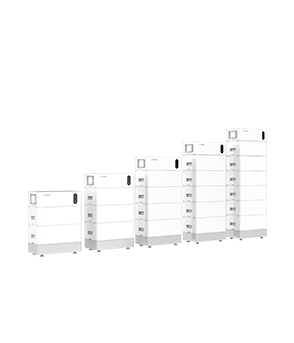
Stackable High Voltage LiFePO4 Home Battery System: Operational Behavior During Grid Failure
During a grid failure event, a Stackable High Voltage LiFePO4 Home Battery System operates through a multi-stage control sequence that prioritizes safety, continuity, and load segmentation.
The system first detects grid instability through real-time voltage and frequency monitoring, isolating itself from the utility supply via an automatic transfer mechanism to prevent backfeed and ensure compliance with electrical protection standards. Once islanded, the battery inverter transitions into inverter-only mode, maintaining household load supply with millisecond-level switching to avoid perceptible interruption for critical appliances such as routers, lighting systems, and refrigeration units. Load prioritization algorithms dynamically shed non-essential circuits while preserving essential loads, optimizing discharge efficiency and extending operational runtime.
Load Switching Architecture and Transition Stability
Load switching performance is a core determinant of system reliability in residential energy storage applications, particularly when multiple high-demand appliances are involved. In this context, a reliable home battery backup solution ensures seamless transition between grid-connected and off-grid states, minimizing voltage drops and maintaining stable output across varying loads . Advanced power electronics coordinate inverter response and battery discharge curves to ensure that load switching does not create harmonic distortion or transient instability within household circuits. At system level, OEM-grade design considerations enable scalable integration across different residential architectures, supporting both single-phase and split-phase configurations depending on regional grid standards.
Modular Architecture and System Engineering Logic
Modern residential storage platforms are increasingly designed around modular stackable architectures that improve scalability and simplify installation in constrained environments. The Dyness engineering approach emphasizes high-voltage LiFePO4 chemistry integration combined with stackable enclosure design to optimize energy density and lifecycle performance in home energy systems. This design philosophy supports OEM and ODM collaboration models, enabling system integrators to adapt battery modules for diverse residential and small commercial applications. By focusing on thermal stability, cycle life, and communication protocol compatibility, manufacturers can ensure long-term reliability across global deployment scenarios.
Load Management and Control Intelligence
During transition events, battery management systems continuously coordinate state-of-charge balancing and inverter synchronization to maintain stable power output. High-speed communication between sensors and control units allows the system to react within milliseconds when grid parameters deviate from acceptable thresholds. This ensures that sensitive loads remain unaffected while larger appliances are temporarily regulated through intelligent load shedding mechanisms. Energy forecasting algorithms further optimize discharge patterns based on usage history and predicted consumption profiles.
OEM and ODM System Deployment Advantages
For B2B partners, stackable battery platforms offer significant advantages in system customization, certification alignment, and market-specific adaptation. OEM and ODM workflows allow manufacturers to tailor voltage configurations, enclosure design, and communication protocols to meet project requirements. This flexibility is critical in residential energy markets where grid standards, installation constraints, and regulatory requirements vary significantly. Proper system design also reduces maintenance cycles and improves overall lifecycle cost efficiency for large-scale deployments.
Battery Management and Grid Failure Protection Layer
A critical component in modern residential storage is the battery management system, which governs cell balancing, thermal regulation, and fault detection during both normal and abnormal operating conditions. During grid failure scenarios, the system prioritizes protective thresholds, ensuring that voltage spikes, frequency deviations, and overload conditions do not propagate to connected appliances. Real-time communication between inverter modules and battery clusters enables synchronized response, reducing latency in load switching events and improving overall stability. These mechanisms are particularly important in high-voltage stackable architectures, where multiple modules operate in series to achieve required system capacity. From an engineering perspective, system resilience is achieved through layered redundancy, allowing partial system operation even when individual modules experience performance degradation. Such architecture is increasingly required in OEM and ODM deployments where field conditions vary and maintenance access may be limited.
System Integration and Operational Outcomes
Overall system performance in residential backup applications is defined by the coordination of hardware architecture, software intelligence, and grid interaction logic. The Stackable High Voltage LiFePO4 Home Battery System model demonstrates how modular lithium storage can deliver both high efficiency and operational reliability under grid instability conditions. By integrating advanced control algorithms with scalable stackable design principles, manufacturers can support diverse residential energy requirements while maintaining consistent safety performance. This positions Dyness as a key provider of engineering-grade residential storage solutions designed for long-term deployment in evolving energy markets. Such systems are increasingly relevant for residential developers, energy integrators, and EPC contractors seeking standardized yet adaptable storage solutions that can be deployed across multiple project scales with predictable performance outcomes. Continuous innovation in system integration will further enhance grid resilience and residential energy independence over time.