 picosf
 Metal detection on a food production line is most effective when the equipment matches the way products actually move through the factory. A detector positioned beside a conveyor has different requirements from one inspecting flour, sugar, or other ingredients falling through a pipe.
Product composition and packaging can also change the detection conditions. Easyweigh provides several configurations designed around these production differences, including conveyor, free-fall, foil-packaged, and combined inspection systems.
Where Metal Detection Belongs on a Food Production Line
Metal contamination does not necessarily originate at the same point in every process. Raw ingredients may contain foreign metal before processing, while cutting, mixing, conveying, or other equipment can introduce fragments during production. Packaging equipment creates another possible source later in the line.
That makes inspection location a production decision rather than simply an equipment decision. An early inspection point can protect downstream processing from contaminated ingredients, while a final check can screen finished products before dispatch. Some facilities may use more than one control point when contamination risks change between stages.
A suitable detector should therefore fit the material at the selected location. Loose ingredients, continuously conveyed foods, and sealed packages require different physical arrangements even though the underlying objective remains the same: identify unwanted metal and remove the affected product from the acceptable stream.
Conveyor Lines Need a Different Detector Setup
Conveyor inspection is appropriate when products travel continuously across a belt. Packaged snacks, bread, meat, poultry, sausages, nuts, and similar products can pass through a detection aperture without stopping the production flow. Easyweigh’s conveyor system is designed for food processing and supports adjustable belt speed, automatic learning, audible and visual alarms, and selectable rejection mechanisms.
The physical dimensions of the product and conveyor matter. A larger aperture may accommodate larger products, but the inspection geometry must still provide suitable detection performance for the application. Belt width, product spacing, speed, and reject position should be evaluated together rather than selected independently.
Food Industry Metal Detectors used on conveyors can identify ferrous, non-ferrous, and stainless-steel contaminants. Easyweigh’s published conveyor specifications also provide different aperture sizes and detection sensitivities across its models, illustrating why equipment selection should be based on the actual product and line configuration.
Bulk Ingredients Call for Free-Fall Inspection
Powders and granular materials do not normally arrive at the inspection point as individual packages. Flour, sugar, tea, noodles, crisps, and other bulk materials may travel through a vertical product path under gravity. Installing a conventional conveyor detector in such a process would not match the material flow.
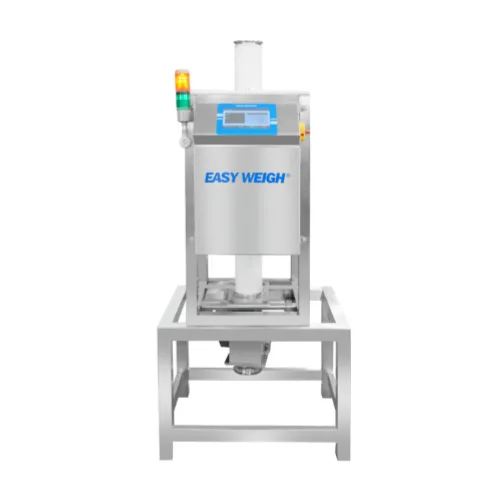
A free-fall detector is designed around this situation. The product moves through a detection pipe, while an automatic separation mechanism removes material identified as contaminated. Easyweigh’s free-fall system is specifically described for granular and powdered products and offers different pipe diameters and throughput options.
Placement can also be strategically important. Screening ingredients before they enter mixers, fillers, or other processing equipment can help prevent metal from progressing further through the operation. The inspection point should be selected according to material flow, accessibility, and the consequences of a rejected batch or portion.
Wet Products and Foil Packs Change the Detection Problem
Food products can create their own detection challenge. High moisture or salt content may produce a product effect that complicates electromagnetic inspection. Meat is one example where food characteristics can influence the signal. Easyweigh describes intelligent learning functions intended to distinguish product-related signals from metal contamination and reduce false rejects in challenging products.
Packaging can create a different problem. Aluminum foil and other metalized materials may generate strong signals that interfere with conventional inspection. A dedicated solution is therefore required when the package itself contains a metal layer. Easyweigh’s foil-packaged detector is designed to distinguish packaging signals from actual metallic contaminants and is positioned for products such as coffee, candy, chocolate, and cocoa powder.
Food Industry Metal Detectors should therefore be evaluated using the complete product presentation. A machine that performs well with an unpackaged dry product may require a different configuration when the same product becomes wet, salty, foil-wrapped, or otherwise challenging.
Detection Must Trigger the Right Production Response
Finding contamination is only useful when the line can respond correctly. A production system normally needs to identify the affected product, stop it from entering the acceptable stream, and provide an appropriate signal for operators or quality personnel.
Easyweigh’s conveyor detector includes audible and visual alarms and offers multiple rejection options. The system can therefore connect detection with an immediate physical response instead of relying entirely on an operator to locate and remove a contaminated item.
Rejection design should reflect the product. Lightweight packages, heavy products, irregular items, and closely spaced products can require different mechanisms. The rejected material also needs a controlled collection point so that it cannot accidentally return to the production stream.
Integration can extend beyond contamination detection. Easyweigh also offers a combined metal detector and checkweigher, allowing weight verification and metal inspection to occupy one integrated production-line position where the application supports it.
Selecting a Detector Around the Actual Line
The right Food Industry Metal Detectors configuration begins with a simple production question: what is moving through the inspection point, and how is it moving? Conveyor products generally call for conveyor inspection. Free-flowing powders and granules require gravity-based inspection. Foil packaging may require specialized technology, while wet or conductive foods demand careful product testing and setup.
Easyweigh’s range covers these different production conditions rather than treating every food line as the same application. Its portfolio includes conveyor, free-fall, foil-packaged, and combination metal detection systems.
Selection should ultimately consider product dimensions, material characteristics, packaging, throughput, contamination type, available installation space, and rejection requirements. Easyweigh can then be evaluated according to how well its equipment fits those conditions.
For food manufacturers, the strongest detector is not necessarily the machine with the broadest list of features. It is the configuration that fits the product flow, detects the relevant metal contaminants, and responds reliably at the exact point where inspection is required. That production-line fit is what turns metal detection from a standalone device into an effective part of food manufacturing control.