 picosf
Line stoppages in packaging facilities, parcel centers, and processing plants trigger immediate logistics gridlock. Every passing quarter-hour leaves pallets stranded and downstream operators idle, multiplying financial losses across the facility. Maintenance supervisors face intense pressure to restore belt tracking and throughput without incurring multi-shift service interruptions.
Splice selection dictates how rapidly field teams can react to unexpected tears or parting seams. Vulcanized bonding procedures demand elaborate site preparation, specialized electrical hookups, and third-party contractors that delay actual repairs. Modern conveyor belt lacing provides an agile mechanical alternative, bypassing structural dismantling and lengthy curing cycles to turn prolonged outages into brief, manageable maintenance events.
Carded Strip Alignment Accelerates Hook Insertion
Manual placement of individual fasteners introduces severe alignment errors and wastes valuable technician time. Handling loose hooks risks uneven spacing, cocked wire legs, and irregular bite patterns into internal tensile cords. Carded packaging arrangements resolve this issue by securing an entire sequence of precision hooks onto rigid paper strips.
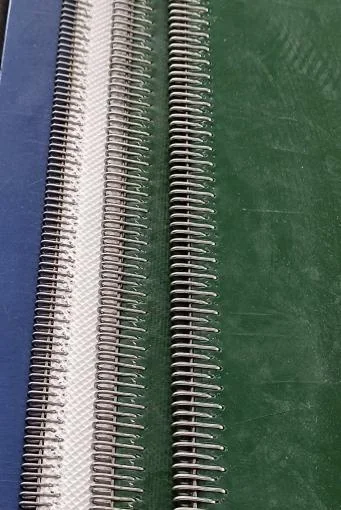
Technicians position the pre-spaced card directly into installation lacer jaws within seconds. Each individual wire hook fastener maintains pitch consistency across the entire width of the belt edge, preventing misaligned points from tearing fabric plies. Intake manufactures carded fastening hardware designed to retain rigid alignment during high-speed insertion, ensuring uniform grip along every centimeter of the joint.
Mechanical crimping sets dozens of wire points simultaneously through a single continuous motion of the lacer. Mechanics avoid repetitive manual measurements because the card backing holds each hook at the exact insertion depth. Peeling away the paper card after clinching leaves a clean, flush fastener row that negotiates scrapers without snagging.
Simplified Edge Preparation Avoids Extended Carcass Peeling
Endless belt vulcanization demands meticulous, multi-stage carcass preparation before bonding can even begin. Technicians must step back individual rubber plies, strip top covers without damaging inner yarns, and apply chemical primers. Such delicate manual peeling consumes hours of painstaking bench work where a single slip ruins the splice integrity.
Mechanical methods require only a clean, square transverse cut across the belt profile before installation starts. Maintenance technicians use straightforward hand squaring cutters to create a straight ninety-degree edge in a matter of minutes. Skipping cover skiving and multi-ply stepping saves substantial labor hours during high-pressure emergency shutdowns.
Clean carcass ends slide directly into open hook points without requiring surface roughening or chemical degreasers. Durable conveyor belt lacing hardware clamps firmly through multi-ply fabric or solid-woven carcasses regardless of light surface oils or residual moisture. Operations teams bypass tedious surface conditioning steps, keeping the restoration timeline focused solely on mechanical attachment.
Mechanical Hinge Joining Skips Chemical Dwell Delays
Chemical cold-bond cements and vulcanized hot splices impose rigid thermal cycles that stall material movement. Hot platens require controlled heating ramps, sustained dwell periods, and mandatory cooling intervals before belting can bear load. Cold adhesives demand precise evaporation and ambient moisture thresholds that prolong maintenance windows in unheated warehouses.
Interlocking mechanical loops bypass thermal dependencies by establishing instantaneous joint strength through physical grip. Opposing hook fingers mesh together over the drive path, forming a continuous conduit for a central connecting pin. Inserting a matching hinge pin completes the mechanical splice within minutes, creating an articulated joint ready for dynamic service.
Selecting a corrosion-resistant wire hook fastener profile guarantees consistent loop geometry that accepts hinge pins without binding. Intake supplies precision-drawn wire hooks and matching cable pins engineered to articulate smoothly around small terminal pulleys. Plant mechanics verify splice closure simply by pushing the retaining pin home, avoiding hours of waiting for chemical adhesives to solidify.
Portable Lacers Enable On-Structure Splice Execution
Heavy vulcanizing equipment presents severe logistical hurdles in cramped mezzanine runs or enclosed transfer chutes. Rigging heavy vulcanizing presses up access ladders requires chain hoists, safety permits, and dedicated three-phase electrical connections. Navigating cumbersome vulcanizing hardware through narrow walkways frequently consumes more time than repairing the torn belt itself.
Lightweight manual lacers allow mechanics to perform repairs directly inside the conveyor frame. Technicians transport compact roller tools by hand to elevated sorting lines or subterranean loading galleries without external assistance. Engineering teams at Intake produce portable installation machinery that clamps securely to conveyor rails, allowing immediate joint execution in restricted mechanical envelopes.
On-chassis lacing keeps the conveyor belt resting naturally over slider beds and return rollers throughout the repair. Mechanics refrain from unbolting bearing housings, tracking sensors, or take-up assemblies to create installation clearance. Completing the splice directly on the conveyor chassis preserves factory tracking calibrations and prevents secondary mechanical disruptions.
Immediate Dynamic Tension Restores Line Throughput
Restoring operational tension represents the final hurdle before restart, and bonded splices present distinct risks during startup. Vulcanized joints require gentle ramp-up cycles to prevent premature delamination along fresh seam boundaries. Any bonding flaw discovered during line testing forces crews to scrap the splice, restart surface preparation, and reapply chemical adhesives.
Clipped mechanical splices accept full working tension and motor torque immediately upon pin insertion. Sturdy conveyor belt lacing distributes dynamic pull across multiple independent wire points, preventing localized stress concentrations along the belt end. Operations managers can energize drive motors instantly to resume parcel transfer, food processing, or bulk conveying without lingering structural concerns.
Field maintenance crews inspect each wire hook fastener visually during initial test rotations to verify proper seating and clearance. Visible fastener geometry provides instant operational feedback that opaque bonded splices cannot deliver to line inspectors. Establishing rapid mechanical lacing standards shields industrial operations from compounding downtime costs, keeping critical supply chains moving without costly repair delays.